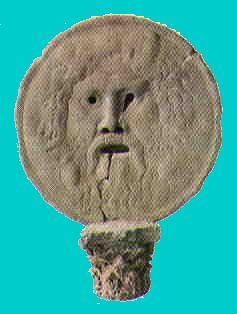
the bocca della verita
the district between the capitoline hill and the tiber river is called bocca della verita. the name means "mouth of truth" in italian, and comes from a large etruscan disk found in the area, still on display. it is said that if you put your hand into the figure's mouth and tell a lie, it will bite you. in antiquity, this district was home to the cattle and fish markets. during the middle ages, though, after the aquaducts stopped running and there wasn't the expertise to repair them, the population of rome moved off of the hills and into districts like this and the campo marzio, right along the banks of the tiber river.
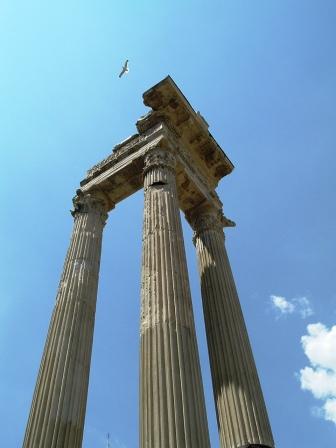
these three columns are all that are
left of a temple to apollo, dating from 34 b.c. they had also collapsed, but
were re-erected in 1940. (the fascist government of mussolini, which liked to
think of itself as the beginning of a new era of glory for rome, invested a
lot of money and effort to excavate, re-erect, and even reconstruct roman era
buildings.)
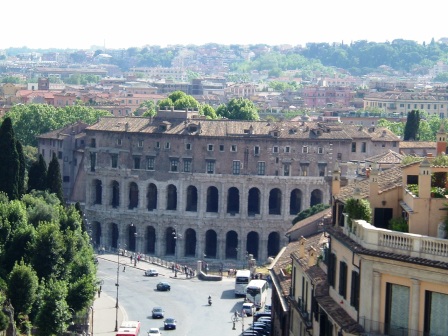
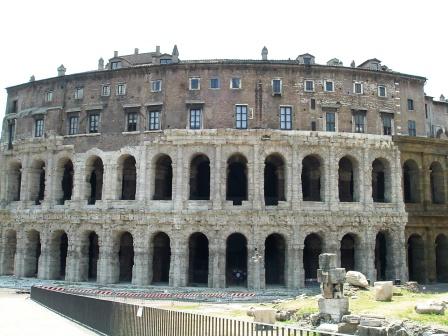
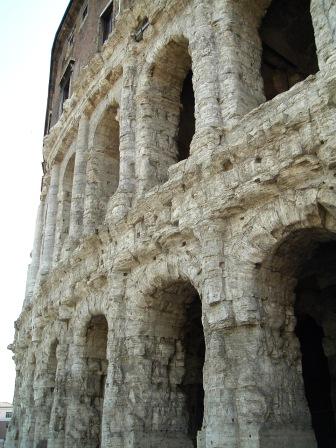
the theater of marcellus was begun by julius caesar and completed in about 12
b.C. under caesar augustus, who dedicated it to his nephew, marcellus. it was
built for open-air plays, and could hold 15,000 spectators. during the middle
ages it was stripped of its marble surface, then, turned into a fortress, and
then in the renaissance into a palazzo for a local noble family (the upper story
is from this last incarnation).
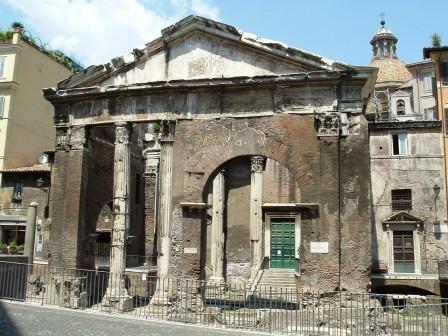
this is the portico of Octavia, built by caesar augustus and named after his
sister. it was once the entrance to a large library and assembly hall, but only
the doorway survives.
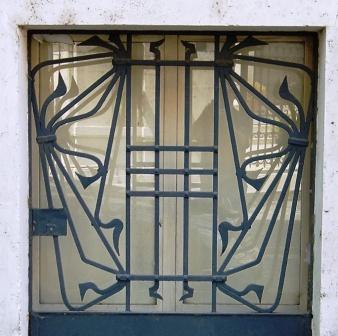
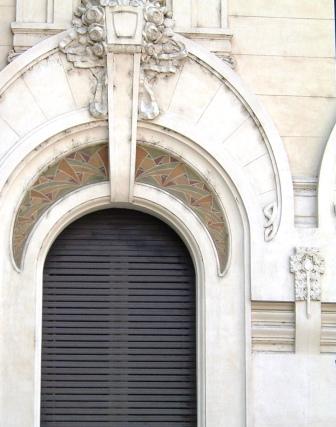
even in ancient rome, modern life continues. across the street from the portico
of octavia was this beautiful "beaux arts" period apartment building,
from around 1900.
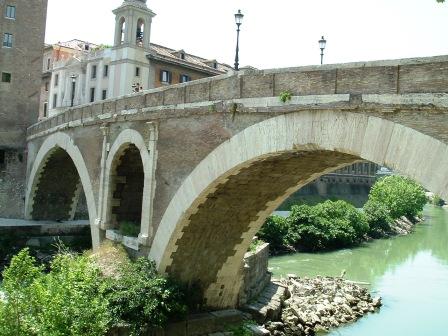
the tiber river flows along the bocca della verita district, and is crossed
by several bridges. this one, the only one to survive intact from the roman
era, leads to the island called tiberina, which in antiquity was the site of
a hospice for the sick.
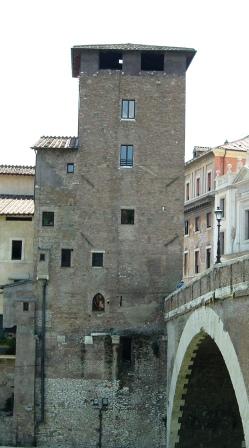
in the middle ages, the tiberina island was populated, and some of the architecture
of that era remains, like this tower.
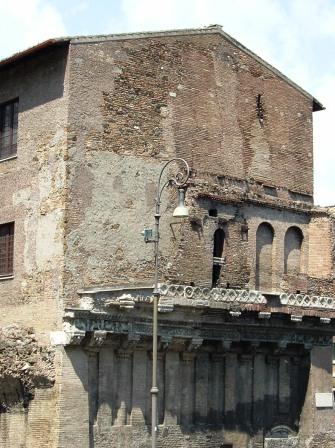
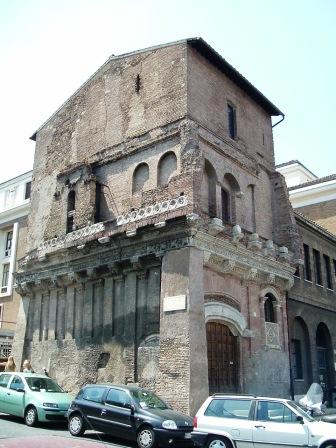
also from the middle ages is this mansion, called the casa dei crescenzi, which
had been built using a roman portico, still embedded into its walls. the crescenzi
family had the right to collect tolls from anyone using the bridge.
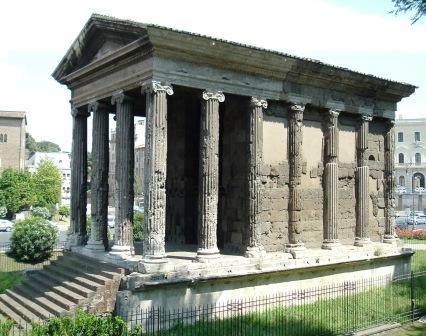
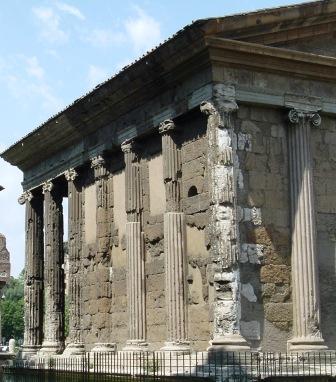
nearby, what must be the best preserved temple in rome. it is called the temple
of fortuna virilis ("manly luck"), but there is no historical evidence
to support this belief. instead, and because of its location, it was probably
dedicated to portumnus, the god of rivers and harbors. during the middle ages,
it was used as a church, which is probably why it is so well preserved. the
church was dedicated to st. mary the egyptian, a prostitute who became a hermit.
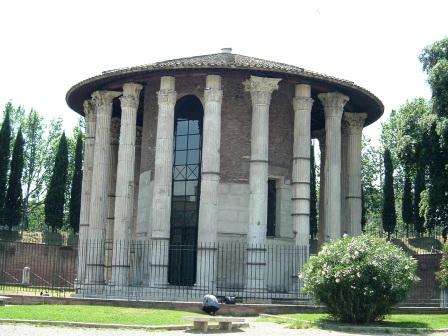
also nearby, the temple of vesta, so-called because of its round shape, which
recalls the shape of the temple of vesta on the roman forum, but more likely
to have been dedicated to hercules. it was also a church in the middle ages,
dedicated to the virgin mary.
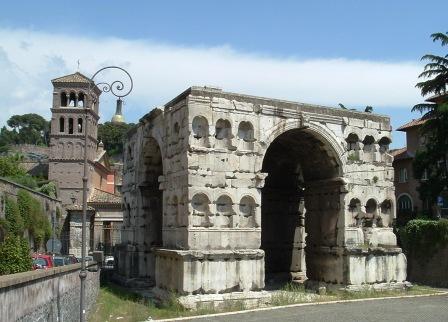
this odd structure is the arch of janus. it served as an official crossroads
and marked the edge of the cattle market. it was dedicated to janus, the god
of crossings (including the crossing of the old year into the new, and after
whom the month of january is named).
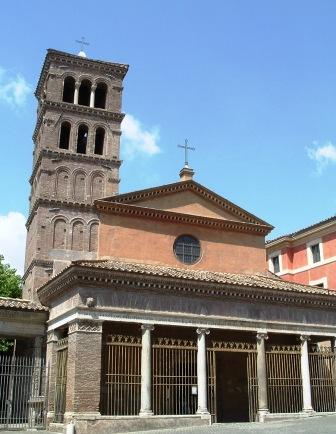
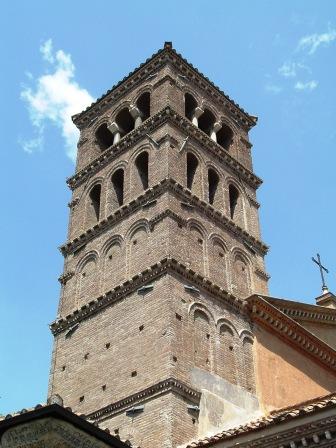
behind the arch of janus is a small but elegant medieval church, the church
of st. george (san giorgio in velabro), built in the 9th century, although its
bell-tower is from the 12th century, and restored to its original appearance
in 1926.


