the capitoline hill
the capitoline hill rises up above the roman and imperial forums. during the republican and imperial eras, it was the site of a temple to the god jupiter, called optimus maximus ("the best and the greatest"), and another temple, to his wife, the goddess juno. the state archives were deposited in these temples, and that is how the name "capital" came to be associated with the seat of government.
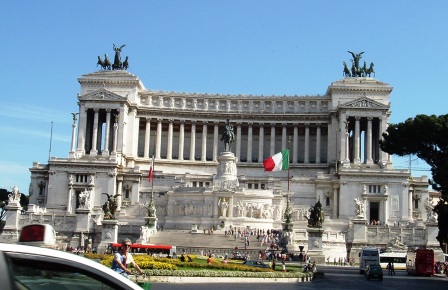
nowadays, the capitoline hill is dominated by a modern monument, built between
1885 and 1911, and dedicated to Victor Emmanuel II, first king of the united
nation of italy. (after the fall of the roman empire, the different regions
of italy were ruled separately--rome and central italy by the popes, southern
italy as the kingdom of naples or kingdom of sicily, northern italy as city-states
based out of venice, milan, florence, genoa, and others. the kings of piedmont
in the northwest, who encouraged the unification, were chosen as kings over
all of italy, although during world war ii the monarchy was abolished and italy
became a republic.)
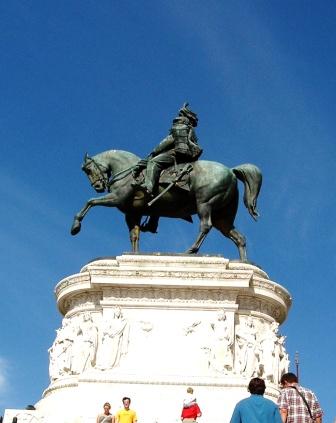
the monument is dominated by this enormous equestrian statue of king victor
emmanuel ii.
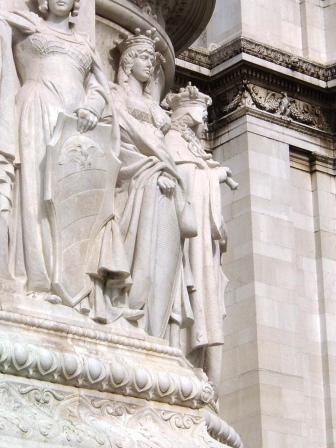
around the base of that statue are figures of medieval women, each representing
one of the italian city-states that joined as italy.
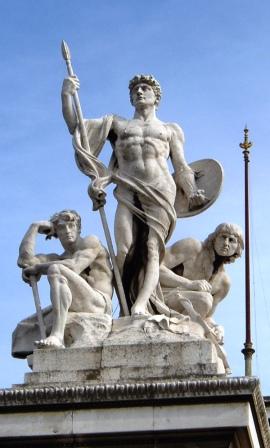
other statues are placed prominently around the monument.
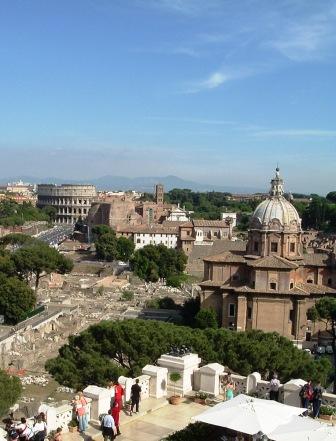
the view from the top of the monument is spectacular: here, looking out over
the forum of caesar toward the colisseum.
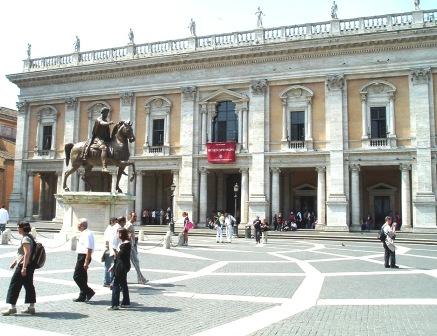
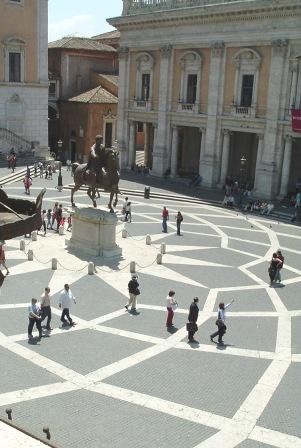
also on the capitoline hill is the Palazzo dei Conservatori ("palace of
the conservators," magistrates of the city), built in the 15th century.
michaelangelo designed the facade and the square, in the center of which is
an equestrian statue of the roman emperor marcus aurelius.
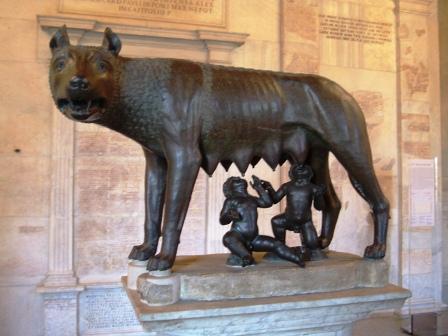
the palace now houses the capitoline museum, one of rome's great collections
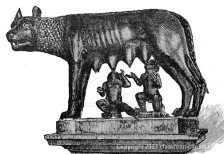
of art. among the most famous pieces is this etruscan sculpture of a wolf. according
to roman legend, the founders of rome, romulus and remus, were abandoned as
infants and raised by a female wolf. the statues of the babies were added in
the renaissance to conform better to the legend. (the word for a female wolf,
lupa in latin, was also ancient slang for a prostitute.)
among the art in the collection:
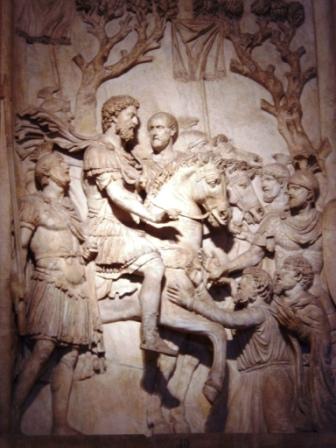
enormous bas-relief sculptures of the emperor hadrian.
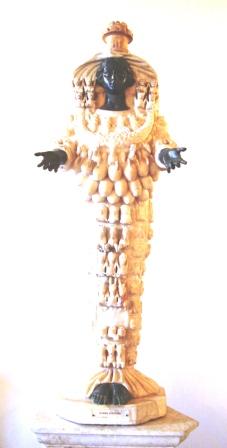
a bronze and ivory statue of the goddess artemis, known as "the many breasted."
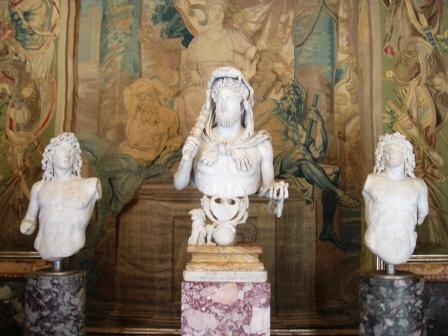
a statue of the emperor commodus, center, dressed as hercules.
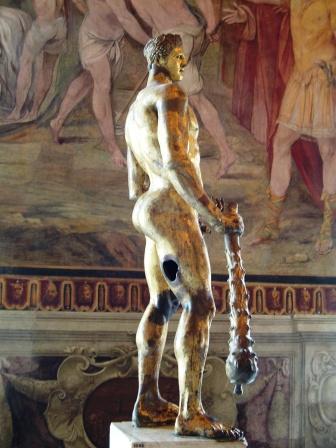
a bronze statue of hercules.
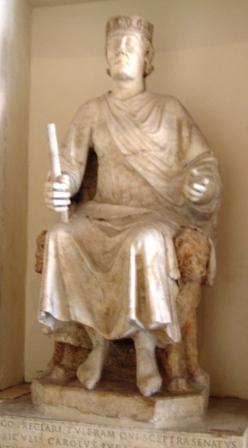
a statue of the medieval french king, Philip IV, called "the fair."
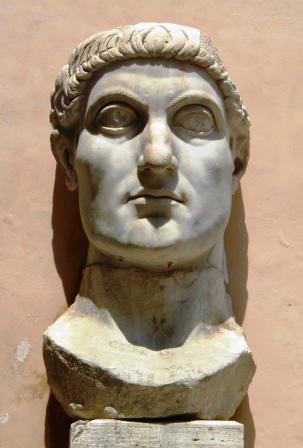
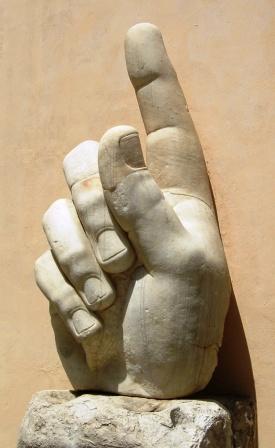
pieces of a colossal statue of the emperor constantine I, called "the great."
(Each piece is about 5 feet high.)
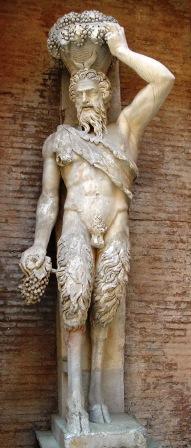
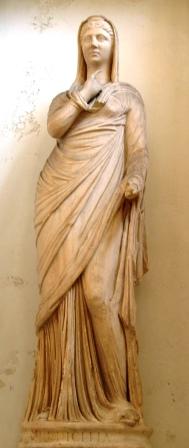
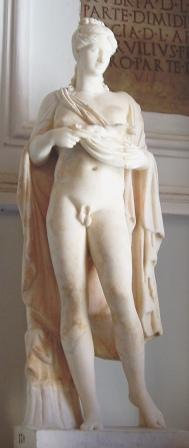
from left to right: pan, the goat-man god, the empress julia domna, and a hermaphrodite.
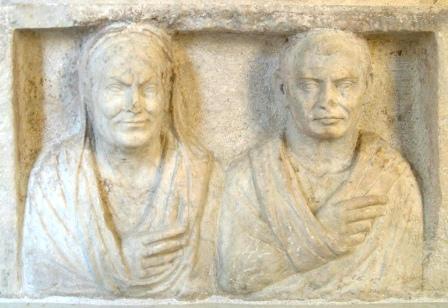
sculpture from a roman sarcophagus of a married couple.
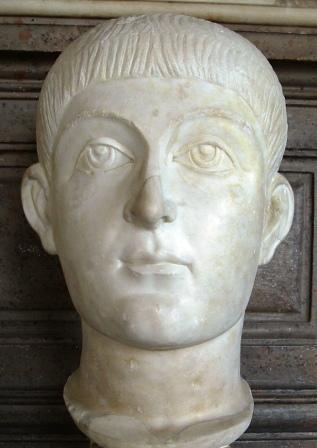
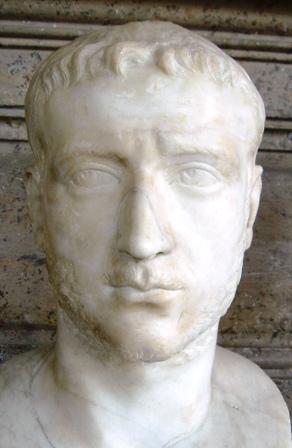
busts of the emperors honorius, on the left, and gallienus, on the right.
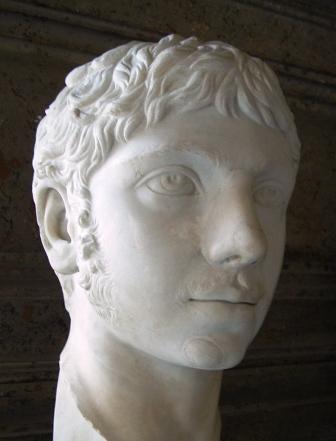
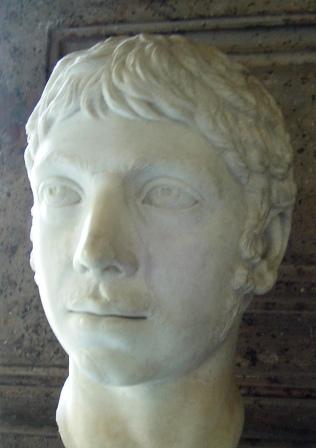
two angles of the sculpture of the emperor elagabalus (who figured in matt's
book, the manly eunuch).
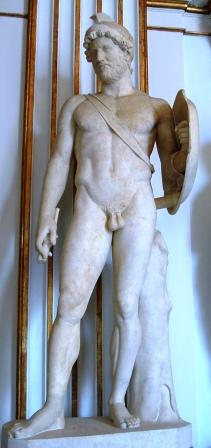
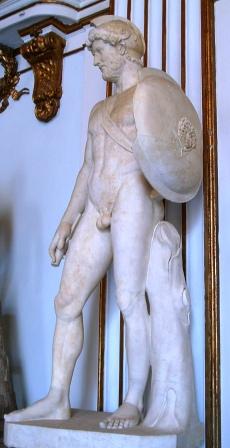
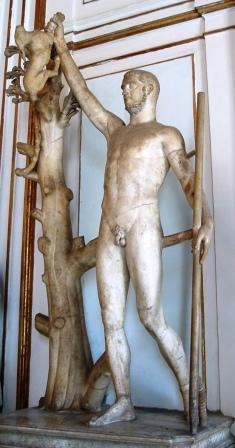
left and center, an unidentified soldier, and on the right, the emperor commodus
holding up a rabbit.
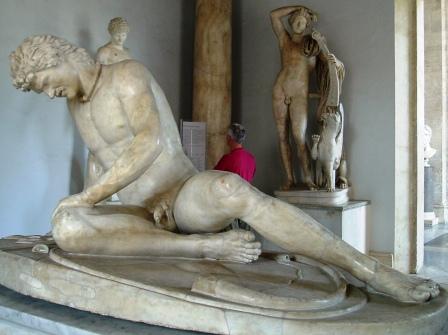
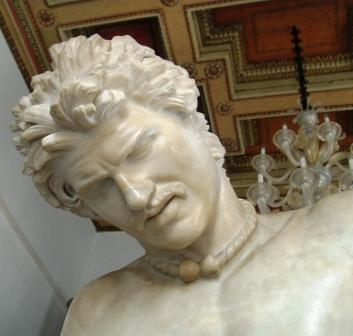
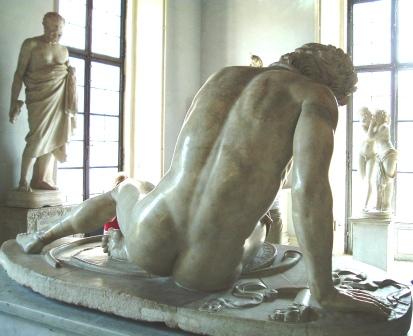
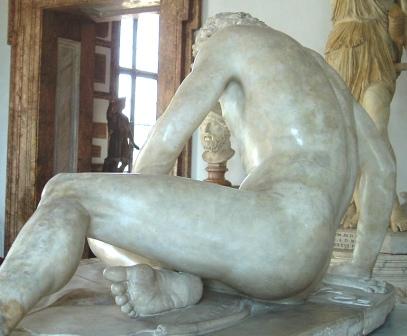
another of the most famous sculptures in the museum, called the dying gaul.
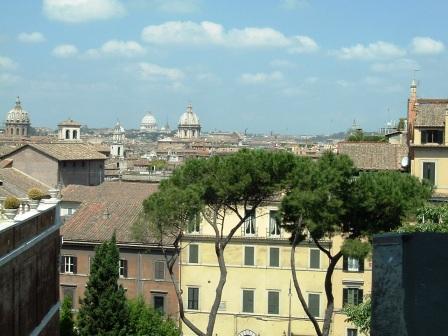
the view from inside the museum shows the many domes of rome.
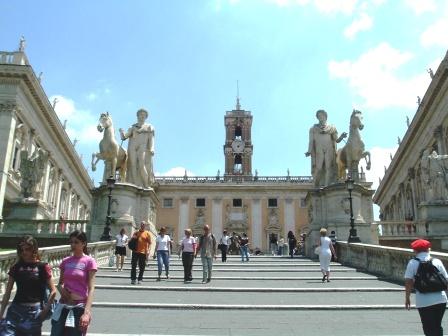
steps lead down from the capitoline hill, flanked by immense statues of the
twin gods, castor and pollux, with the palazzo senatorio ("senatorial palace")
in the background, built in the 12th century but remodeled by michaelangelo
in the 16th century as part of his design for the square.


