
the campo marzio
the campo marzio--the roman campus martius, or field of mars--was the heart of medieval rome. its narrow and winding streets still harken back to the middle ages. but it remained the center of rome in the renaissance, and many mansions were built in the district. the campo marzio shows clearly the complex layerings of eras in rome's past.
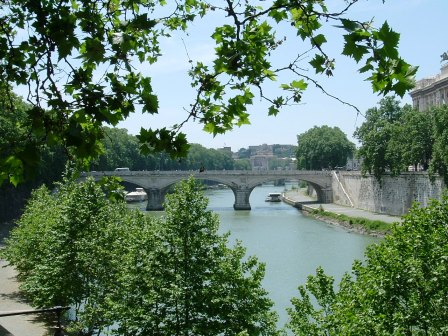
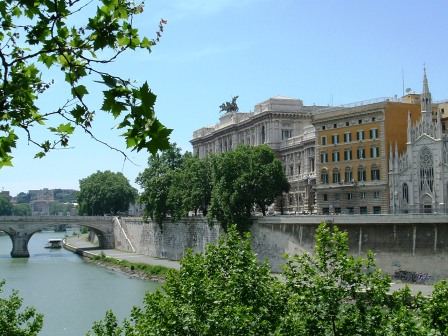
the campo marzio follows the curve of the tiber river.
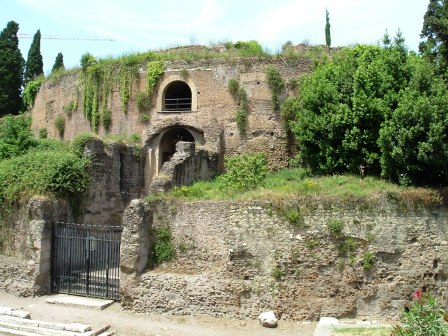
surviving from the roman era is the mausoleum of augustus, built in the round
style that originated with etruscan mound tombs. in the center of the mausoleum
was the tomb of caesar augustus; his family members were entombed in smaller
rooms around the center. soil was mounded atop the building, and cypress trees
planted there. in the middle ages it was converted into a fortress, and in modern
times it was used as a concert hall. in the 1940s all of the later additions
were removed.
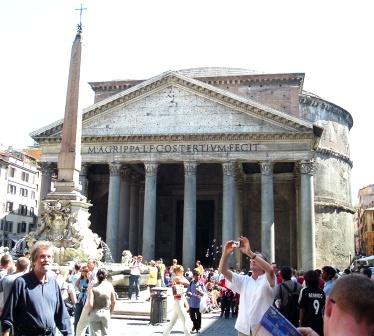
also from the roman era is the pantheon, a temple to all the gods. it was built
by Agrippa in the era of Caesar augustus and closely associated with him. (in
fact, augustus designated agrippa as his successor, and agrippa married augustus'
only child, his daughter julia, but when agrippa died before augustus, without
any son, the husband of his daughter from a former marriage, tiberius, became
emperor after augustus' death. agrippa's daughter by julia was agrippina the
elder, who was caligula's mother).
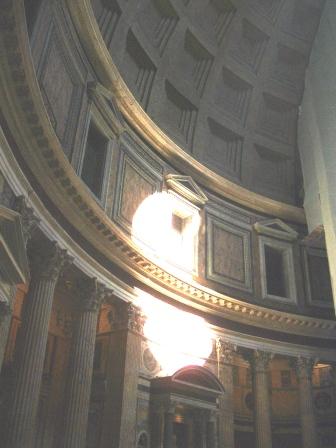
the unique feature of the pantheon is its domed roof. the interior is lit by
means of a hole in the middle of the dome, called the oculus (the direct sunlight
from this hole is visible in this photo). The dimensions of the dome fit precisely
with the rest of the space, so that if the dome were doubled to make a giant
sphere, it would exactly touch the floor and walls of the building.
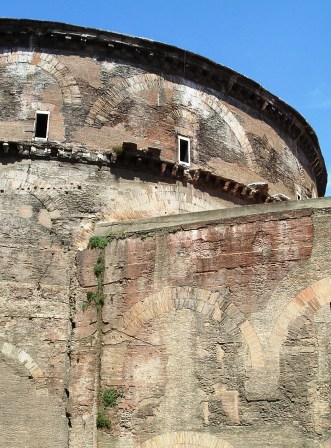
the exterior walls are very thick--20 feet--with supporting arches to hold up
the weight of the dome.
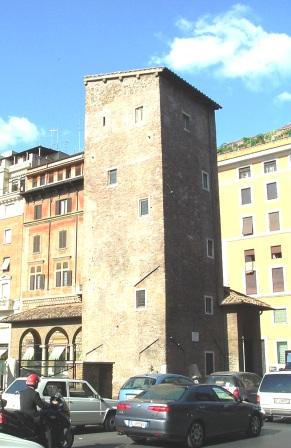
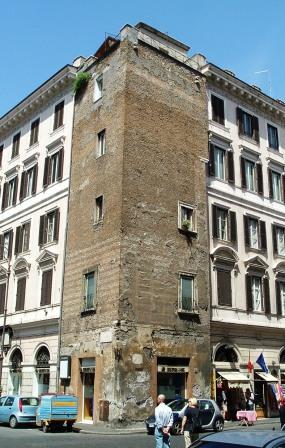
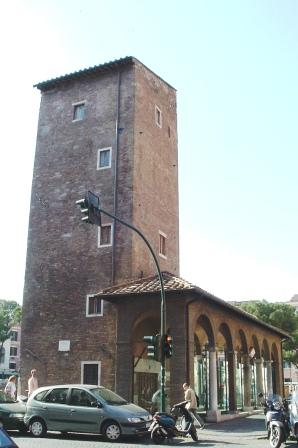
the campo marzio is home to what remains of the towers built in the middle ages.
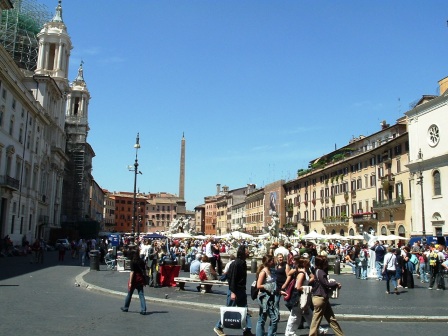
also in the campo marzio is the piazza navona, a long oval public space created
out of a roman stadium.
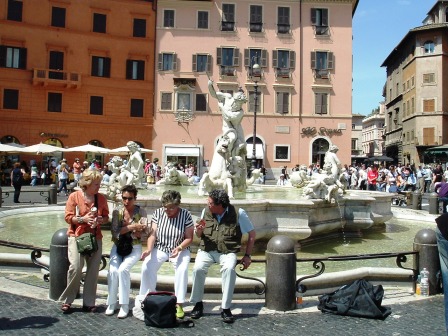
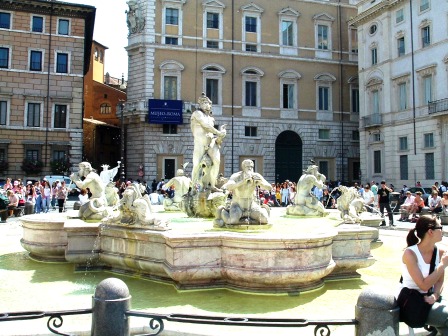
during the 17th century, the sculptor Bernini created three huge fountains for
the piazza navona. this fountain, at the northern end, is called the fountain
of neptune.
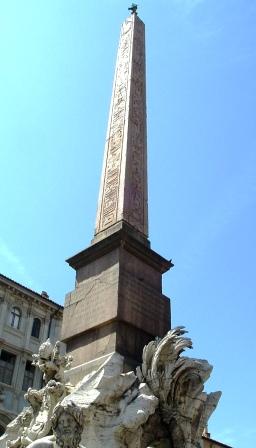
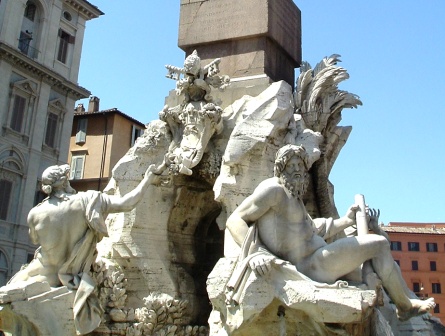
this fountain, in the center of the piazza and incorporating an egyptian obelisk,
is called the fountain of the rivers (each of the figures represents a major
river of the world: the danube for europe, the nile for africa, the ganges for
asia, and the plate for the americas).
this fountain, at the southern end of the piazza, is called the fountain of
the moor.
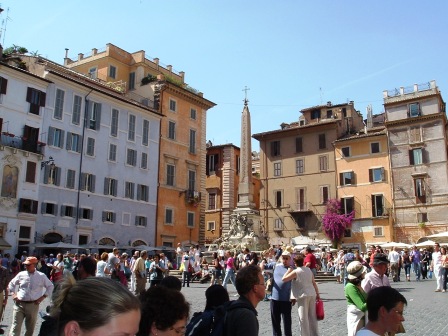
the ancient romans were very fond of stealing the obelisks of ancient egypt
and transporting them to their capital. over the centuries, many of these have
been moved to new locations, often used in public squares, as here outside of
the pantheon.


