Cévennes
One day we drove
inland from Montpellier to the region known as the Cévennes.
It is a rather remote mountainous area, and Matt wanted to visit a couple
of
Saint Gerald churches here. We found some very interesting sights along the
way!
Our first stop was in a little village called Mas-de-Londres.
Its church is
dedicated to Saint Gerald. We couldn't find anyone
who had a key to let us into the church, unfortunately.
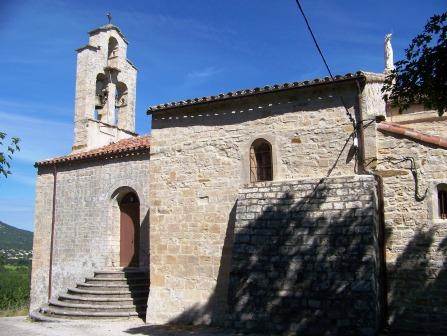
A woman who worked
at the tourist office in the nearby town of Saint-Martin-de-Londres, though,
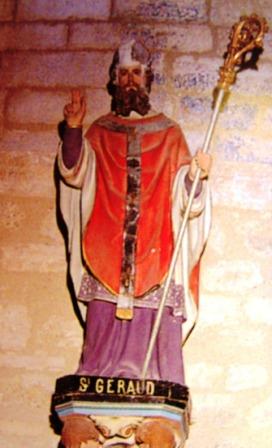
was able to tell us quite a bit about it. She had a photo that she gave us
of the image of Saint Gerald
inside that church. Curiously, as you can see, Saint Gerald is depicted here
as a bishop. It seems that
as Gerald's memory was forgotten here, he was confused with a bishop of Béziers
called Guiraud.
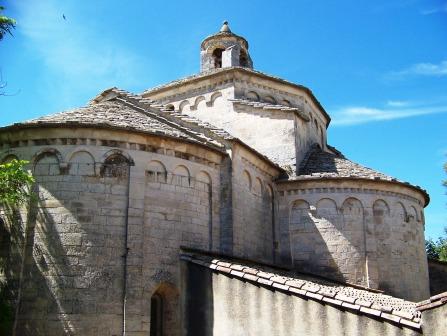
We stopped for lunch in Saint-Martin-de-Londres, a sleepy town that was quite attractive, although not touristy at all.
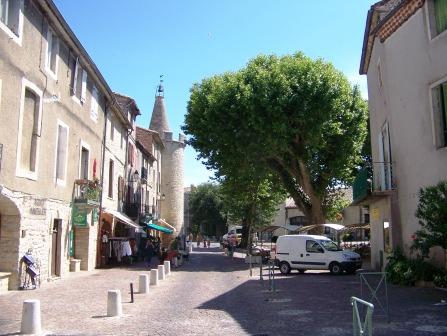
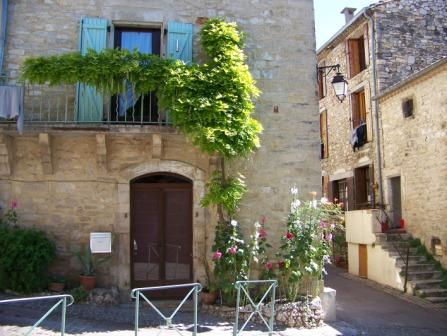
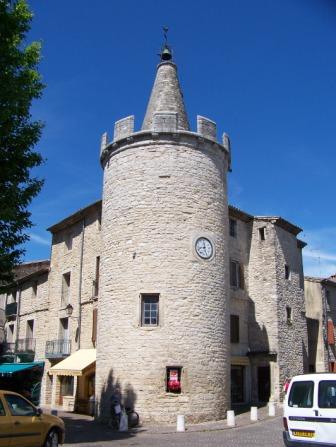
Most appealing was the set of covered passageways and courtyards around the church.
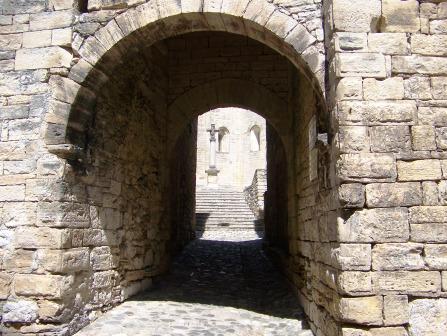
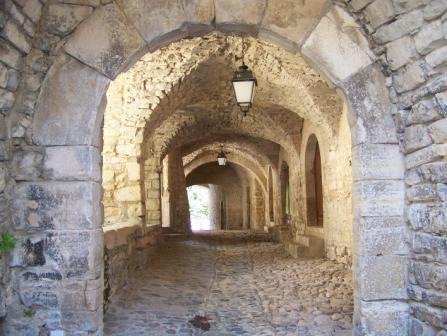
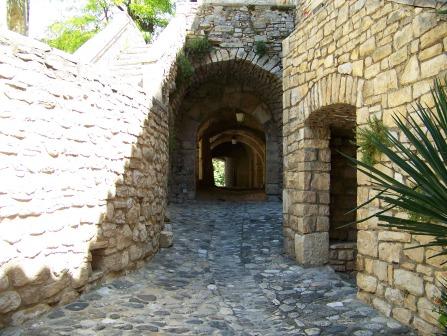
From there we
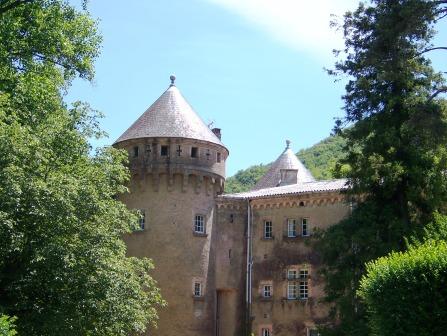
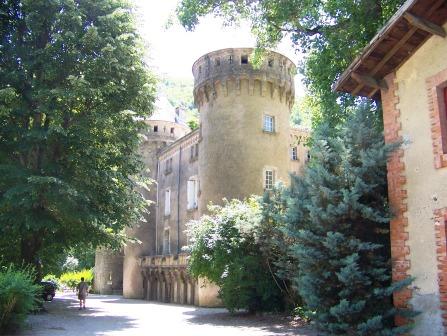
continued inland, stopping briefly at this
castle-turned-hotel--and we never did find out the name of it!
We continued on
to the village of Arrigas. While the church is not dedicated to Saint Gerald,
his memory has
been preserved in a nearby mountain named the Pic Saint Guiral or Peak of
Saint Gerald. Apparently there
was once a chapel on the mountainside dedicated to Saint Gerald, and in the
seventeenth century, a hermit
lived beside the chapel. By the nineteenth century, this hermit was thought
to have been Saint Gerald himself,
so Saint Gerald is represented in a painting in the modern church of Arrigas
as a hermit (in the photo below).

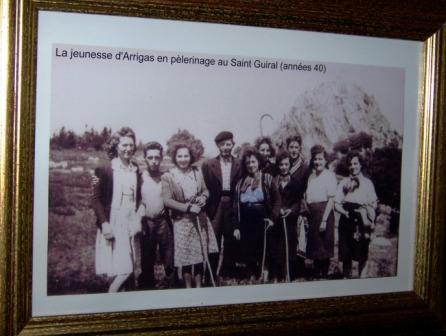
A
photograph from the 1940s shows young people making a pilgrimage to the shrine
of this Saint Gerald.
(You can see the Peak of Saint Gerald in the background of the photo.) Pilgrimages
still continue to this day.
Also
in this church were statues of Saint Roch (left, the patron saint of
victims of the plague) and Saint Genesius (right, patron saint of actors).
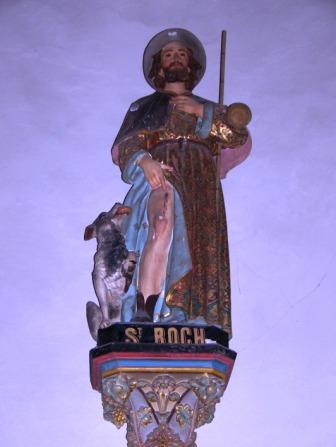
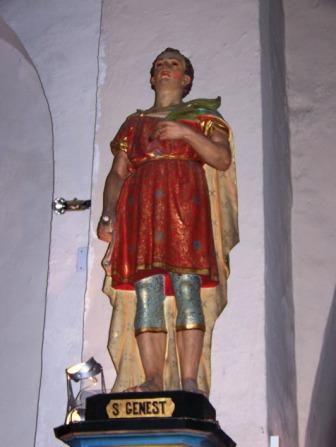
Not far from Arrigas
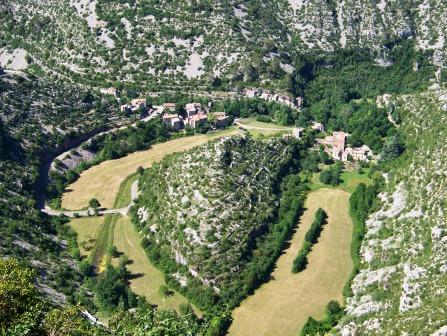
was an interesting geological formation, called the Cirque de Navacelles.
The Vis River made a great twist that carved out a circular valley before
changing course.
We drove down one side of the valley and then back up the other side.
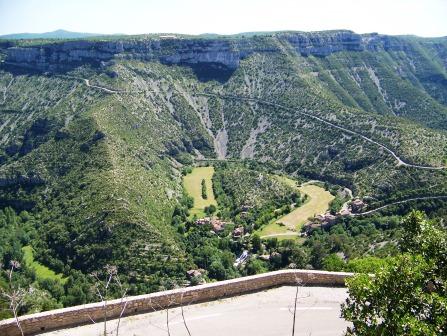

There is a small village at one end of this valley, alongside the present-day river.

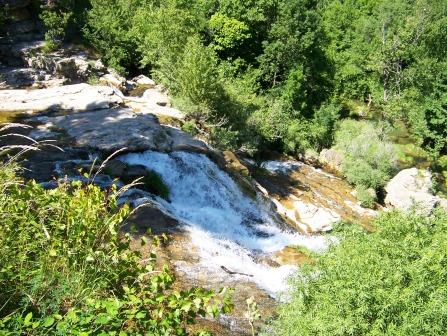
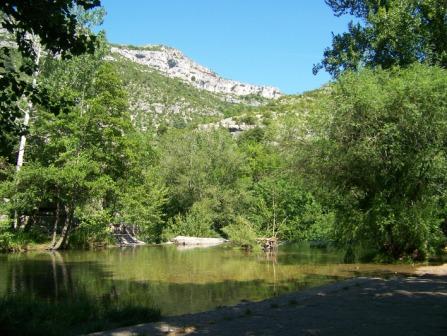
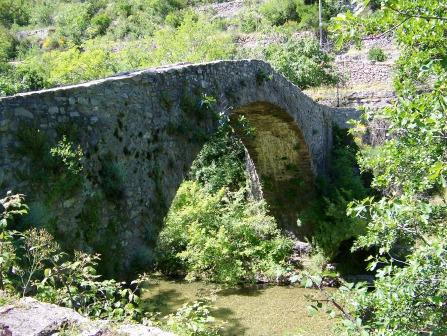
It was a peaceful and fascinating place!

From there we continued to our last stop of the day at the village of La Couvertoirade.
The village was
built as a fort by the Knights Templar, and then given to the Knights Hospitaller
in the fourteenth century when the Knights Templar were disbanded in disgrace.
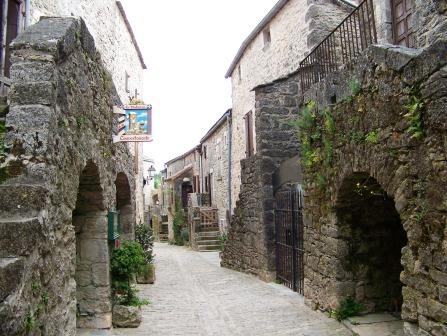
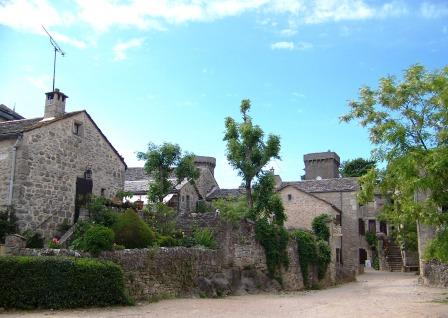
Entering the
village was like stepping back in time: its medieval walls are still intact,
and the narrow streets
are lined with picturesque stone houses. There are a few shops and restaurants
here, but the
place was remarkably untouristy, which only added to its appeal. What a remarkable
sight!
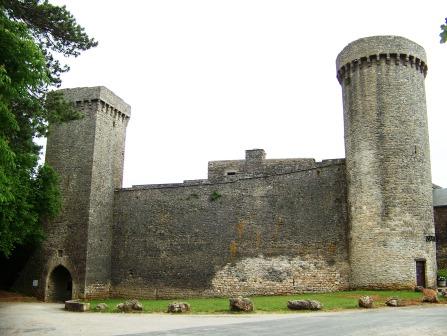
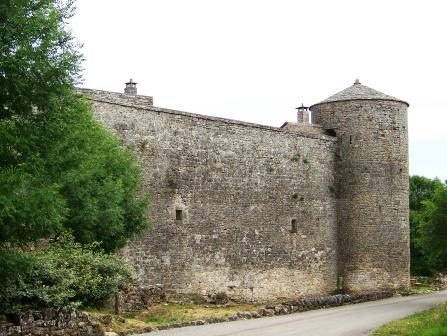
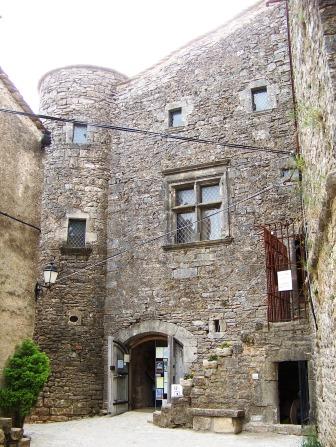
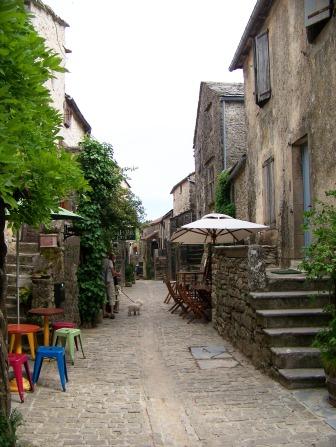
In one of the towers was a model of the village.
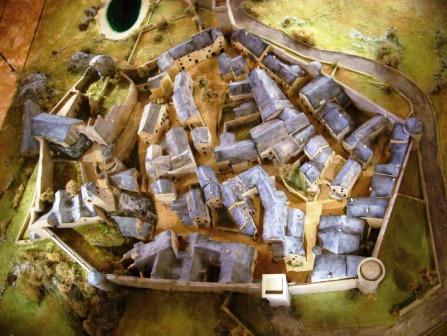
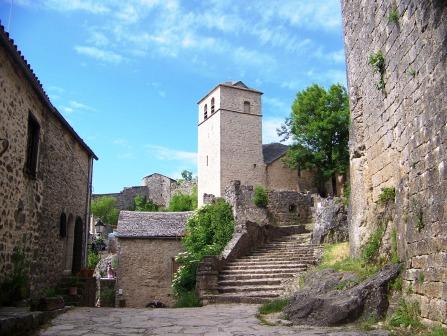
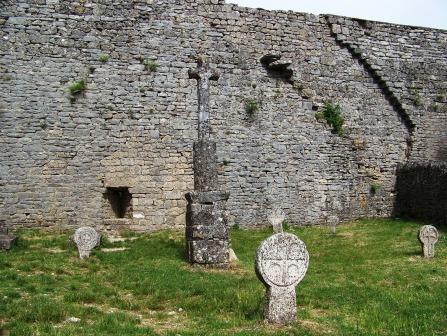
While the church's
belltower was rebuilt in modern times, the circular
tombstones in the cemetery beside the church date back to the Middle Ages.
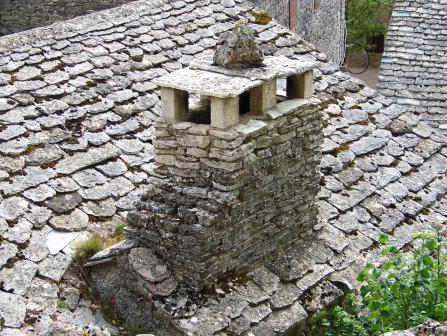
The town also had lots of slate shingled rooves like those we have seen in our other trips to south-central France.
What an enjoyable way to end our visit to France!
Brian and Joe returned to San Diego, and Matt continued on to do his research.
Click here to go to the next page for Matt's visit to the region of Upper Provence.
Close this page to return to the main menu and map of southern France.