ostia
ostia was the ancient port of rome. since rome probably had more than a million inhabitants throughout the period of the roman empire, that meant a lot of supplies had to come in and out of ostia, where sea-going ships unloaded to smaller boats for the trip up the tiber river or onto wagons to be hauled overland to rome. not surprisingly, ostia became a sizeable town in itself. in late antiquity, the seacoast shifted outward and ostia was covered with sand dunes, so remained very well preserved until rediscovered in the 20th century.
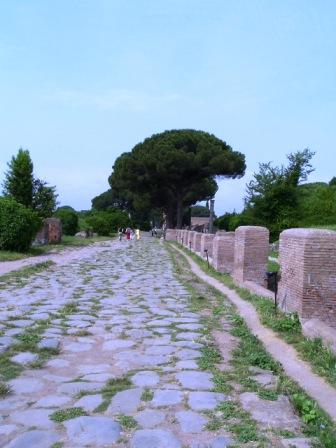
the old roman road into ostia.
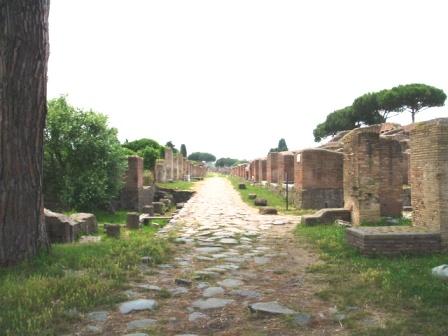
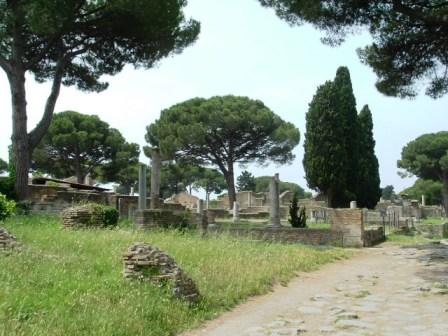
the main streets through the ancient town.
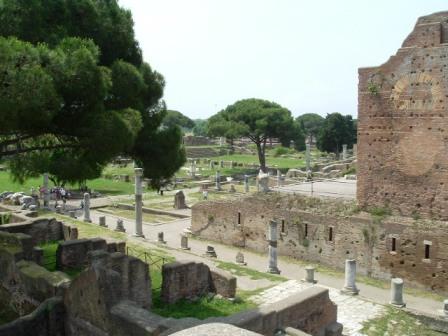
the capitolium, a temple dedicated to the roman gods jupiter, juno, and minerva.
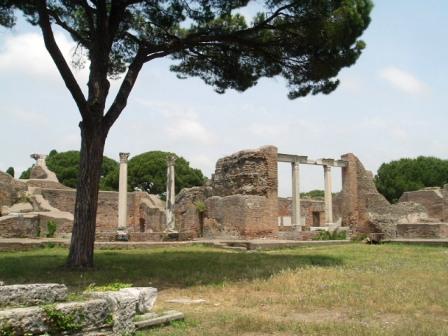
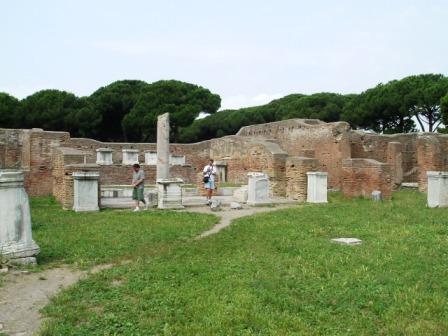
the forum or main square of ostia.
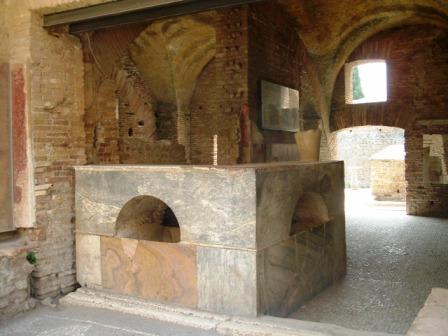
a fast-food restaurant, roman style: food was sold over the counter, and kept
in vases and on shelves in the rear.
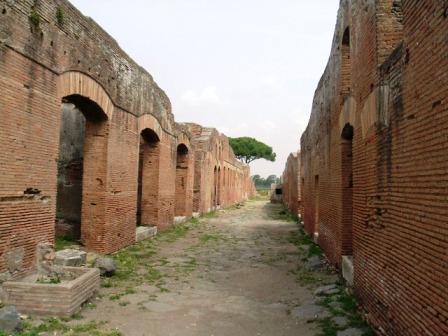
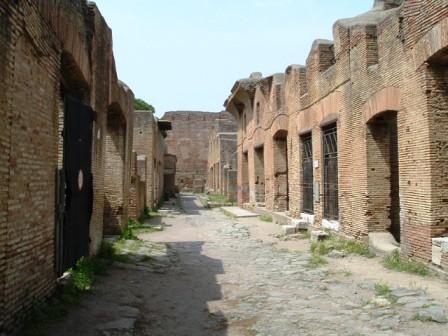
the side streets of ostia were lined with insulae, the latin word for multi-storied
apartment buildings. since this was mostly a working class town, there were
not as many mansions as at pompeii.
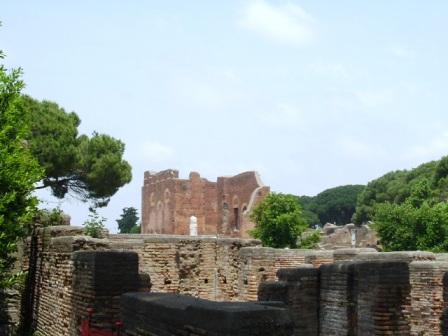
sometimes several stories survived of these insulae, and we were able to walk
upstairs for an interesting view of the town.
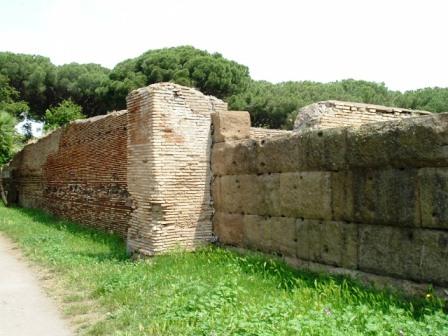
a section of the old wall of ostia, already obsolete in roman times, so used
as part of walls of buildings.
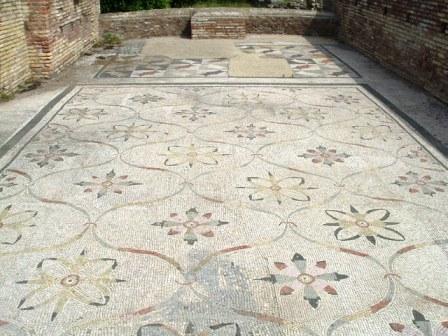
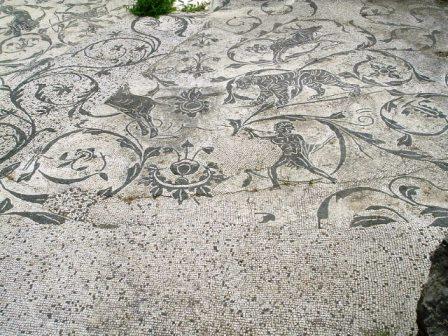
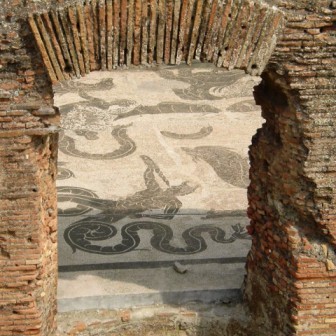
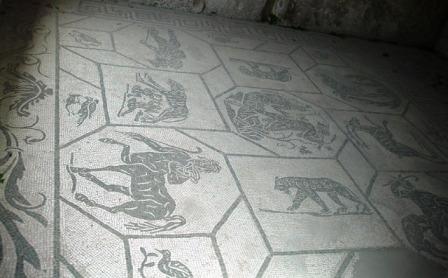
among the most impressive sights in ostia were the mosaic floors, often in excellent
condition.
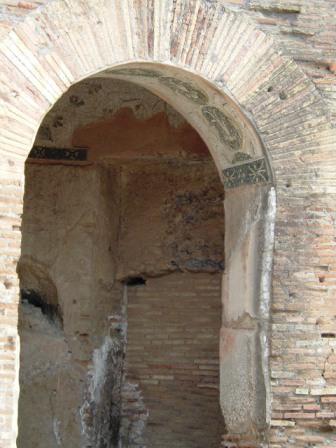
note the surviving painted plaster on the inside of the arch.
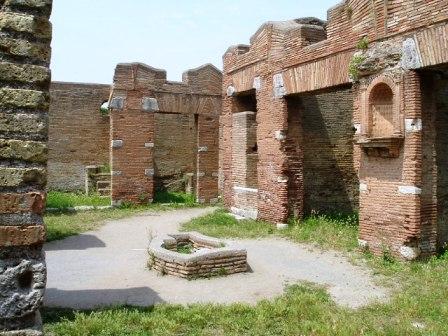
a shopping mall, roman style: different shopkeepers rented the stalls around
this central courtyard for one-stop shopping.
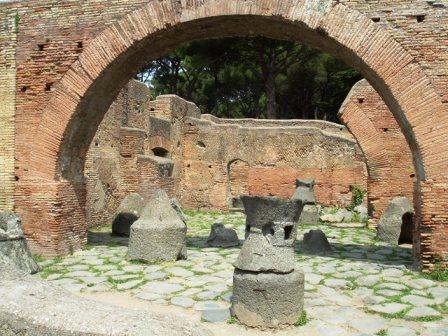
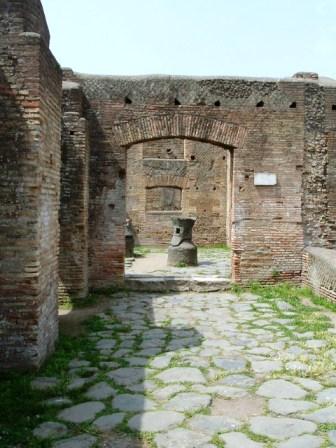
the millstones still survive from the many graineries where wheat arriving at
the port was ground into flour for the city of rome.
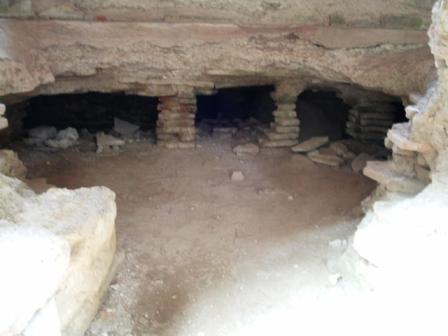
no roman town was complete without a bathhouse. Here the foundations of ostia's
bathhouse show how its rooms were heated: slaves tended fires under the raised
floor, called a hypocaust.
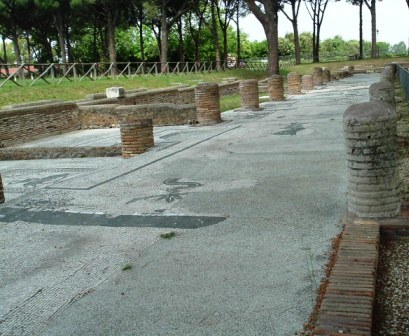
one of ostia's most interesting sights is its piazzale delle corporazioni, or
square of the corporations. merchants and commercial representatives from across
the roman empire kept agents here at ostia, at these stalls, to sell goods to
the roman market.
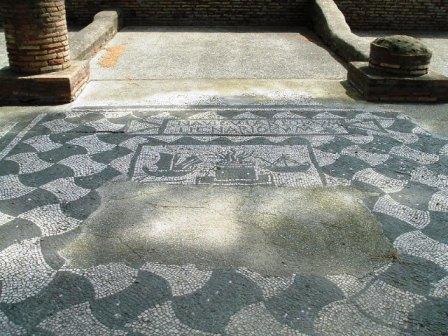
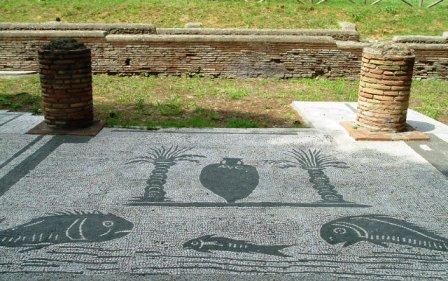
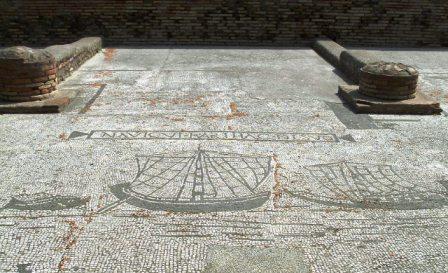
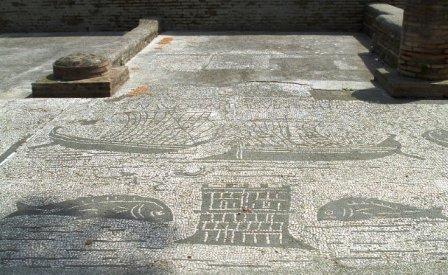
the mosaic floor at the entrance to each stall identified what the nature of
the business was, mostly shipowners, fish merchants, and even a seller of date
palm oil, as these images demonstrate.
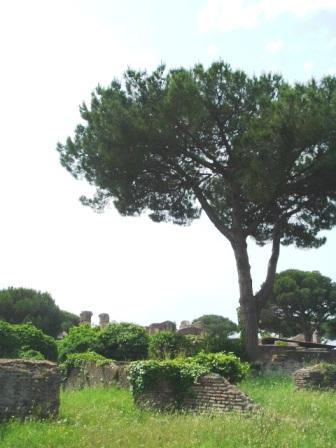
also at ostia, the ubiquitous umbrella pine tree.
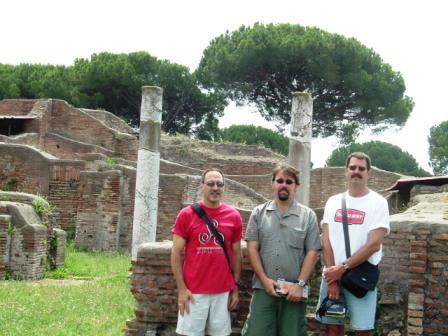
ostia was our final stop, since it is not far from there to rome's airport,
and we were able to head out the next morning. ostia was a great final stop
in our tour of italy.


