the esquiline hill
the esquiline hill lies to the south of the quirinal hill, and to the east of the forums and the apartment where we were staying. it is where many of the tourist hotels are located, and where the main train station of rome is, so is quite a busy district.
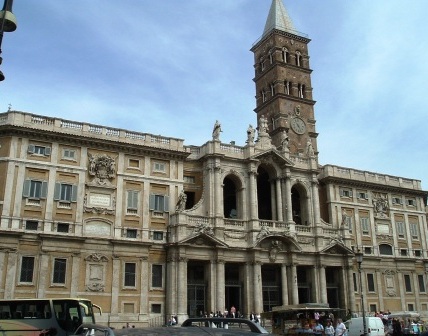
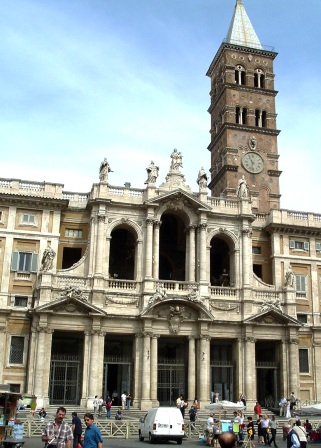
the esquiline is home to the basilica of santa maria maggiore, one of the original
four christian churches first designated as such by the emperor constantine
after the end of the persecutions. the original church still survives, but has
been covered over with layers of later renovations, including a 13th-century
campanile and an 18th-century entrance. one evening while going to dinner, we
encountered a huge procession--including thousands of nuns, priests, and members
of lay confraternities, also dozens of bishops and cardinals, and at the end
of the procession, the new pope kneeling in the back of a white pick-up truck!
the procession was heading to santa maria maggiore.
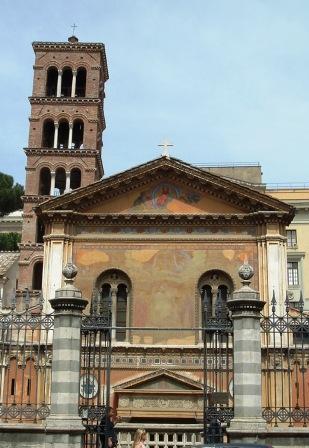
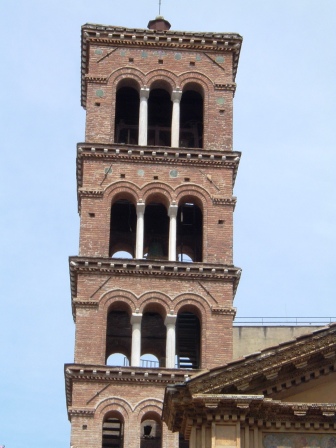
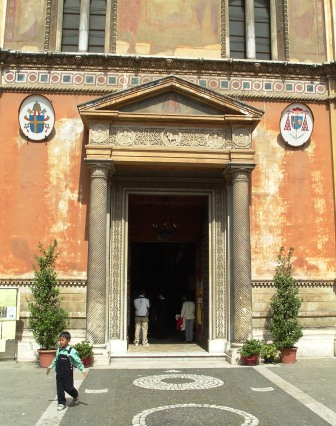
far more interesting were the smaller churches in the same area that had not
been covered over by later renovations. these included the church of santa pudenziana,
seen here, that is now a church for filipino catholics. the doorway and campanile
date from the 12th century, but the interior has 4th-century mosaics.
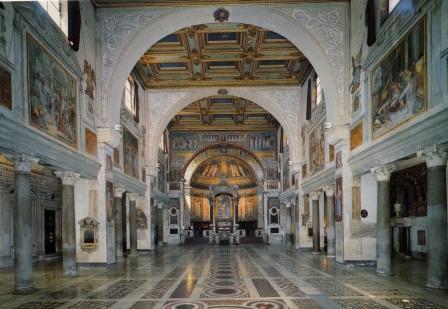
another fascinating church was the church of santa pressede. the current church
dates from the 9th century.
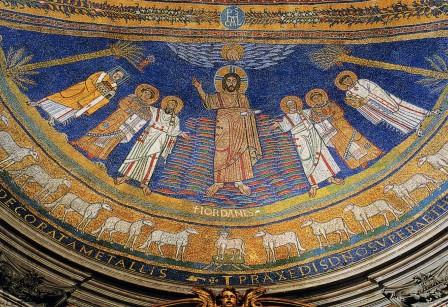
most spectacular are the mosaics, also dating from the 9th century. in the half-dome
above the altar is Jesus, surrounded by figures, including st. praxedes herself
and pope paschal I, who had the church built.
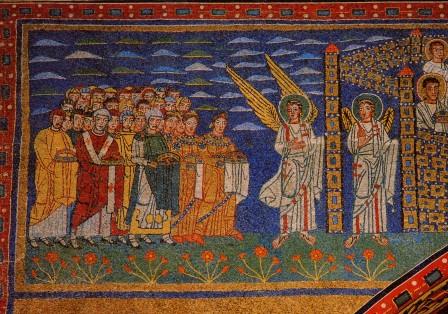
another scene shows the welcoming of the blessed into heaven.
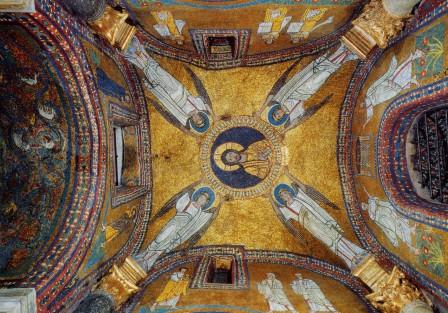
just as remarkable is a tiny side chapel, from the same period.
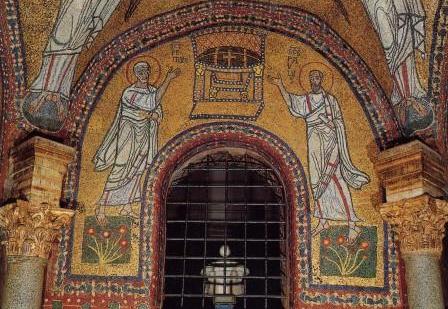
above the windows and doorway into the chapel are more figures of saints, peter
on the left, and paul on the right, the two saints associated with the origins
of the church in rome.
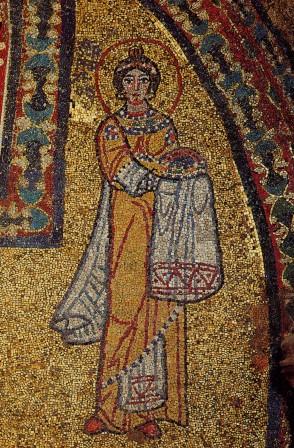
this mosaic is of saint praxedes (santa pressede), after whom the church is
named. she is holding a crown, a symbol of martyrdom.
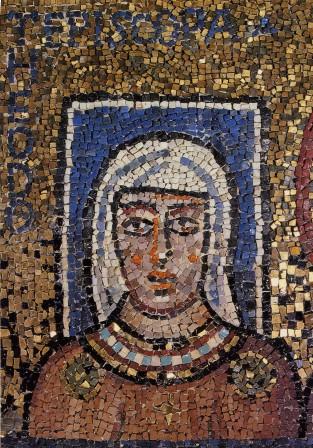
most fascinating of all was this 9th-century mosaic of a woman named theodora
and identified as an "episcopessa." Since "episcopus" is
the latin word for bishop, its feminine form either means that she was a female
bishop or the wife of a bishop.
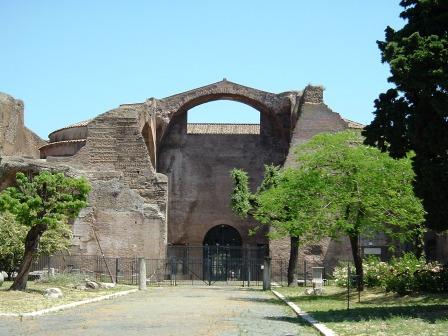
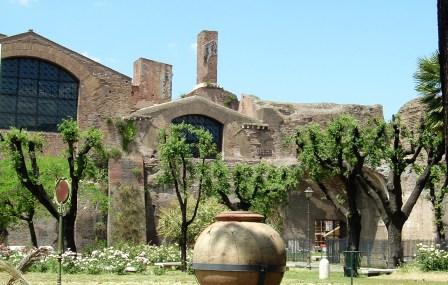
not far are the baths of diocletian. built in the early 4th century A.D.
as a public bathhouse--and the largest in rome, at 32 acres, able to
accommodate 3000 persons at a time--the many rooms for cold, warm, and
hot Baths, for dressing and saunas, were turned in the renaissance into a
church designed by michaelangelo. the church is still there, but the
exterior was demolished in the 20th century to reveal the bathhouse walls.
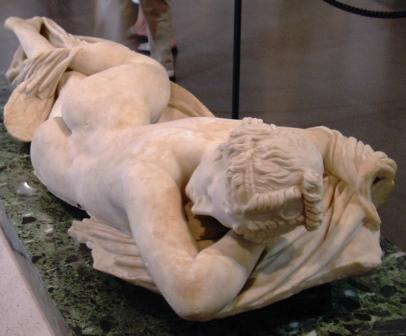
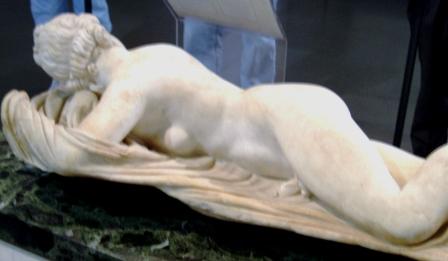
the figure of a reclining hermaphrodite.
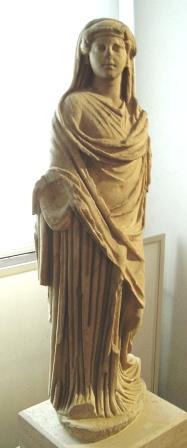
a roman actor dressed as a woman (in formal theater, men usually played women's
roles,
since women were prevented for reasons of modesty from appearing on stage).
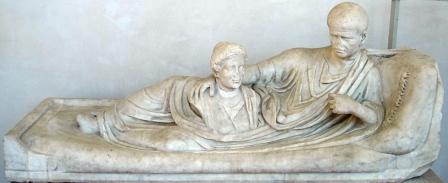
the lid to a sarcophagus, showing a husband holding an image of his wife.
Had she died before him?


