Lyon
is another ancient city, founded by Celtic tribes on a hilltop near
the place where the Saône and the Rhône Rivers meet. Its
name comes from Lugdunum, meaning "hill of [the Celtic god] Lug."
The Romans made it the capital of their province of Gaul, and this hill
came to be known as Fourvière,
a French corruption of Forum vetus or "the old [Roman] forum."
During
the Middle Ages Lyon was ruled by its Catholic archbishop, and the city
moved down the hill to the edge of the Saône River (the area now
known as Old Lyon). Then in the Renaissance the city moved again, across
the Saône River to the peninsula of flat land that lies between
the two rivers just before they meet. Of course, the modern city has
filled up all of these areas and expanded even further.
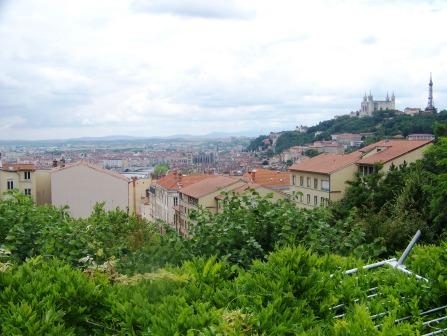
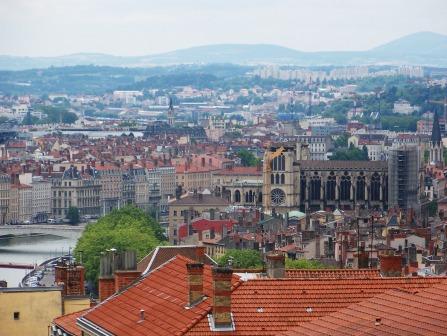
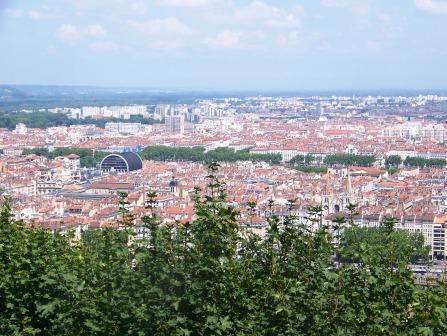
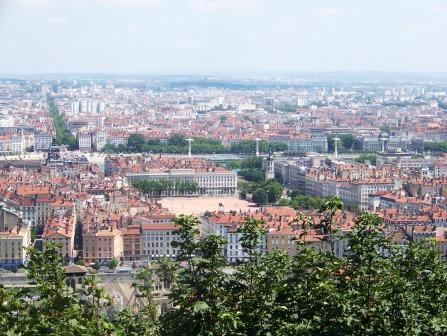
The view from the top of Fourvière
hill shows the huge expanse of the modern city.
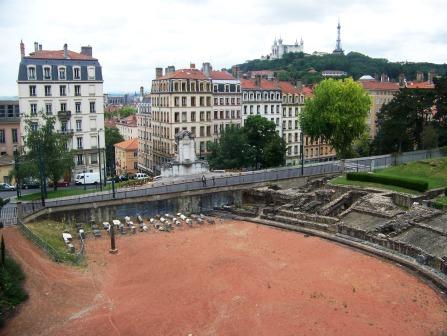
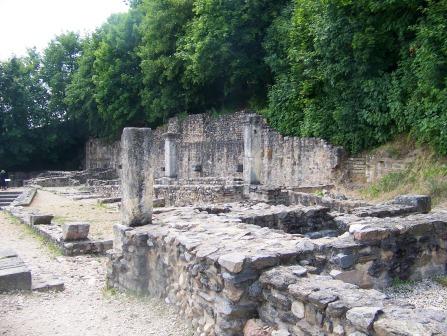
Bits of the ancient Roman city are still
visible. Below left is the old amphitheater and below right is what
survives of houses along a Roman street.
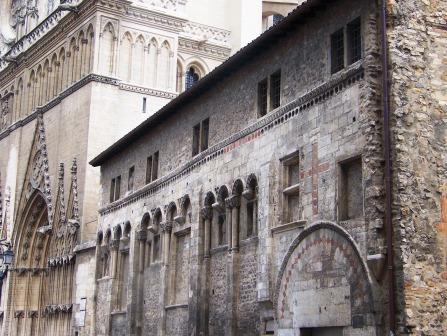
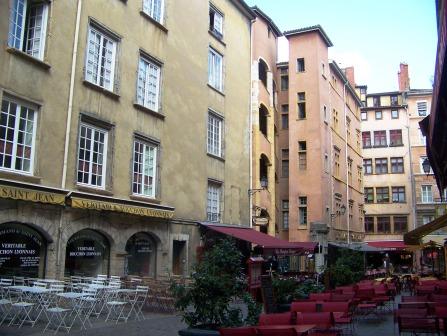
The medieval part of the city, now
Old Lyon, has beautiful old buildings and squares filled with restaurants and
cafes.
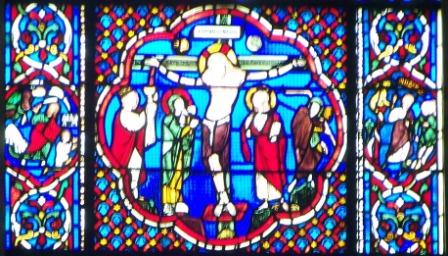
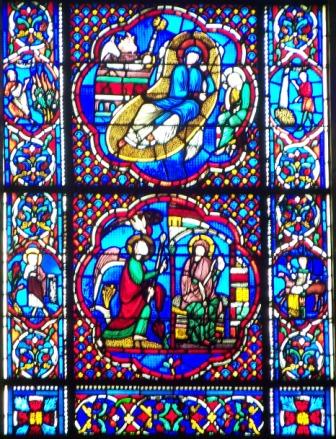
Since the city was ruled by an archbishop,
the Gothic cathedral is a masterpiece for which no expense was spared.
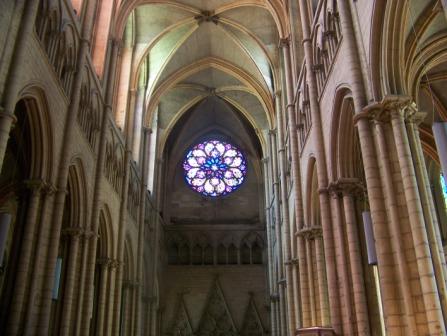
Particularly impressive are its
stained glass windows, still surviving from the Middle Ages.
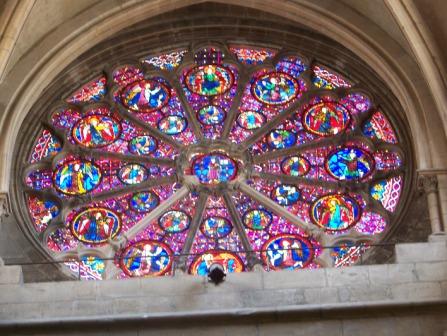
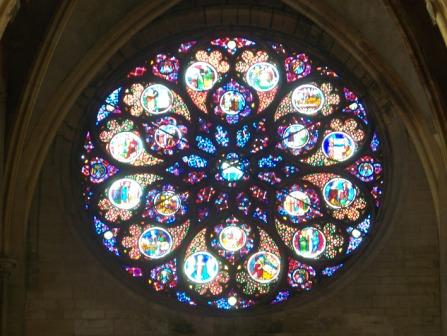
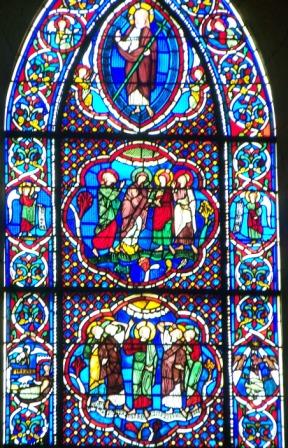
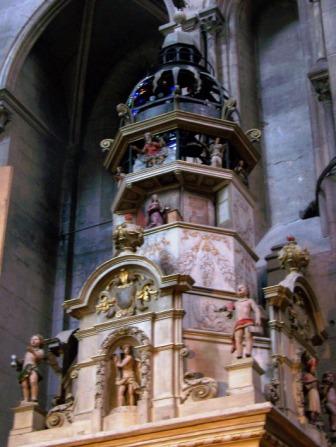
The cathedral is also known for
the complex clock in its interior, built in the fourteenth century.
At the top, figures representing
God and the saints appear, twist around, bend, and gesture to mark the hours.
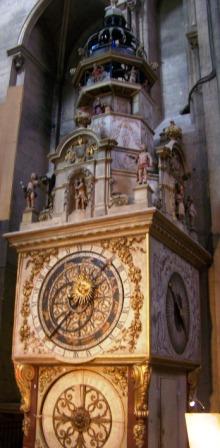
Below them, one dial marks the hour
out of all twenty-four hours of the day.
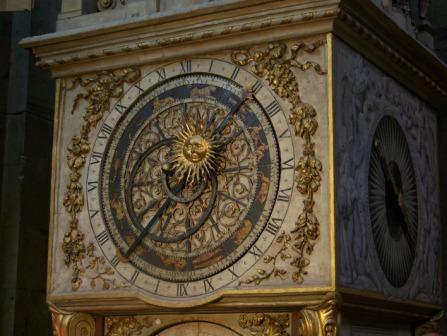
Below that, a second dial tells
the day of the year, swinging slowly around the 365 positions of the circle.
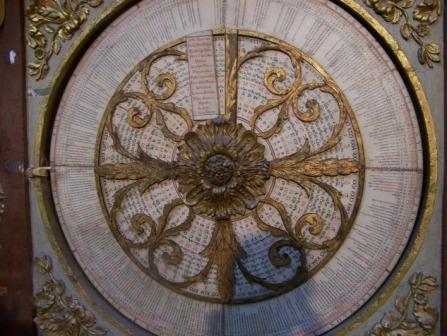
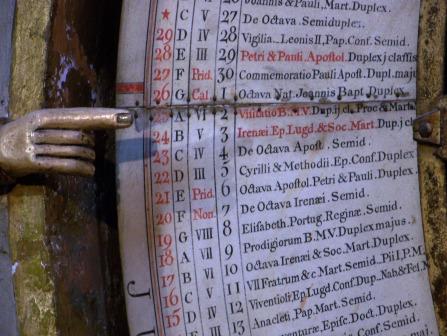
What is interesting about this last
dial is that a hand marks not only the day but which saint's feastday is celebrated
that day.
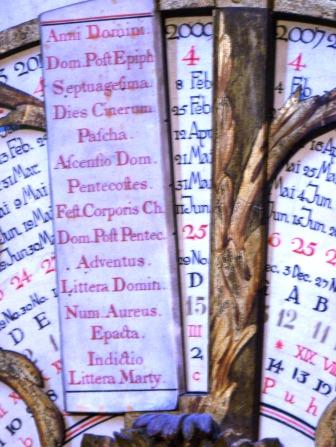
At the top of this same dial is a special tag that marks the date of major Catholic
feasts, like Easter, that change date from year to year.
(You'll see that 2009 is indicated below, so it's been updated regularly since
the fourteenth century.)
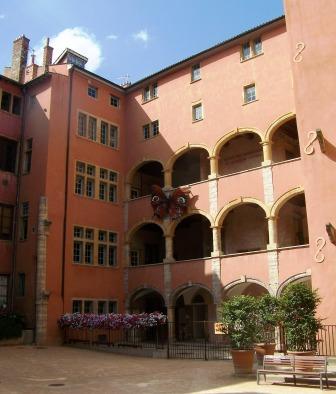
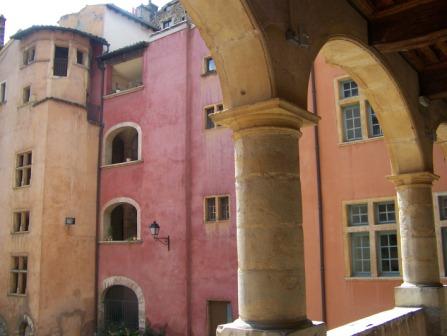
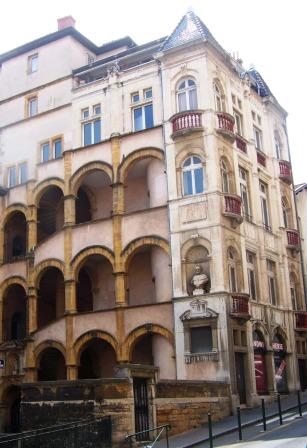
Old Lyon is also known for its medieval
mansions, built by the wealthy townspeople who made their money through trade.
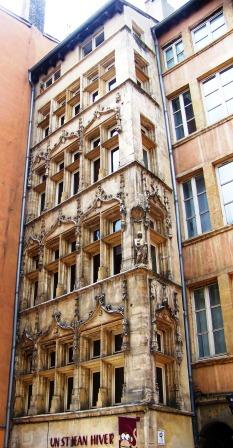
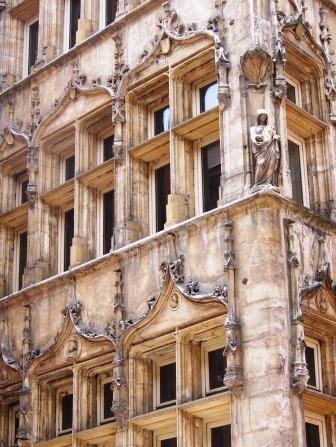
Most of these mansions were built
around open courtyards, and the arched passageways
of many of them can be seen today when only part of the original building still
stands.
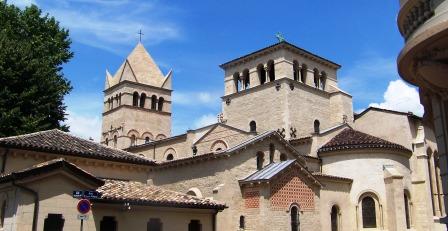
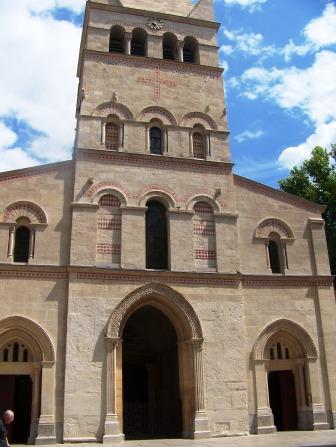
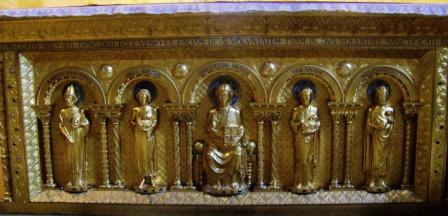
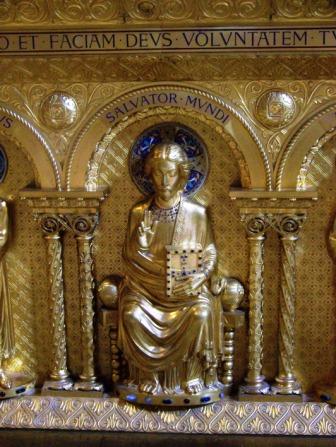
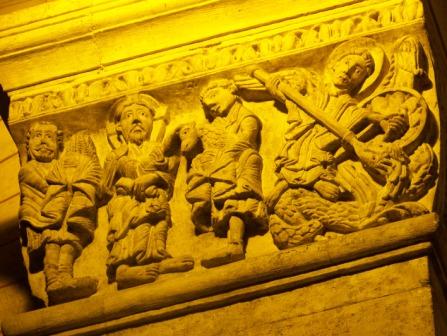
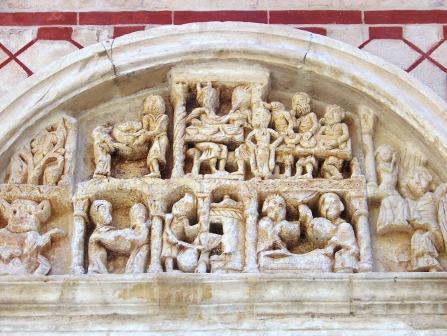
Also from the Middle Ages is the
former monastery of Saint Martin d'Ainay.
It was originally situated on an island in the Saône
River, but in modern centuries was joined to the mainland.
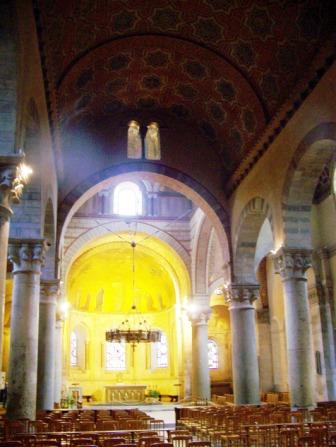
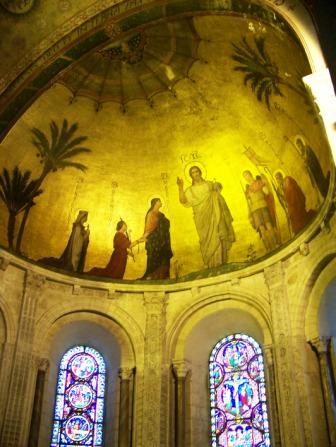
The mosaic in the main dome of the
church is modern, but there are beautiful examples of medieval artwork elsewhere
in the church.
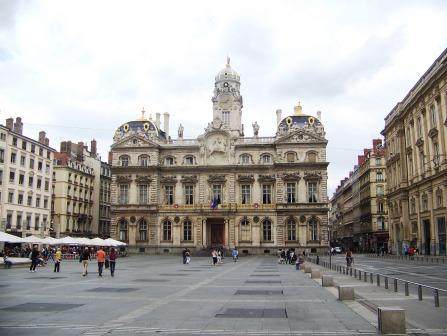
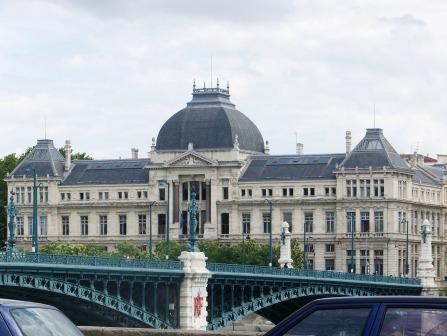
The more modern buildings in Lyon,
found on the peninsula between the two rivers, are equally impressive.
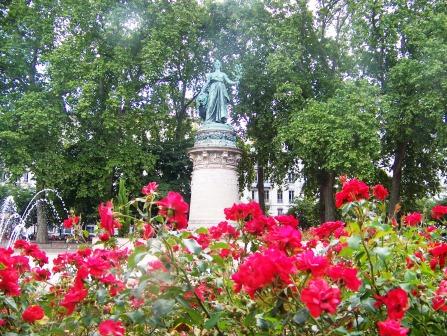
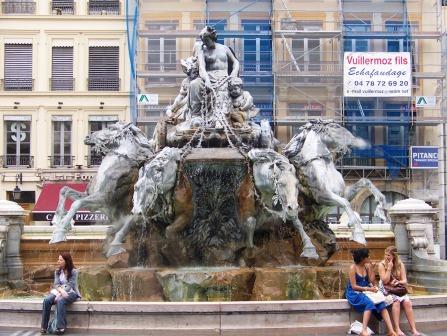
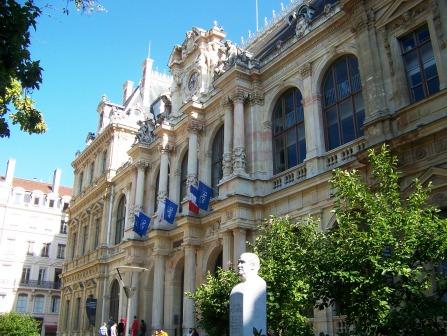
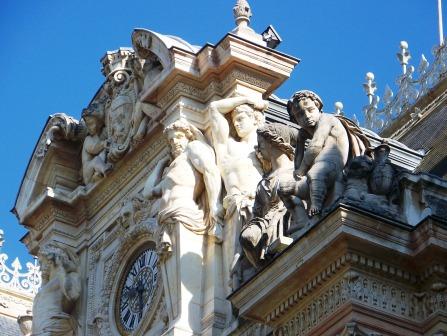
Lyon even boasts some interesting
recent art and architecture, like the fountain, below left, and the opera house,
below right.
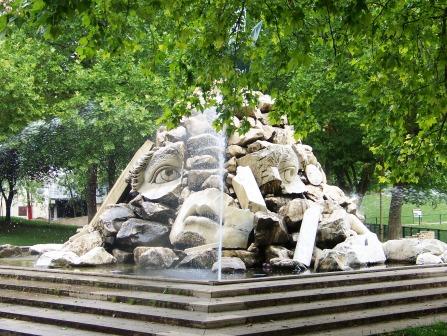
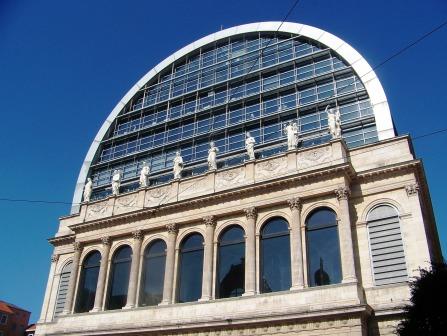
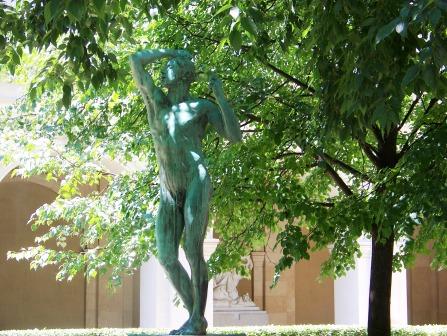
Lyon's art museum is a former seventeenth-century
convent, and the former
cloister provides a tranquil, sculpture-filled spot in the midst of the busy
city.
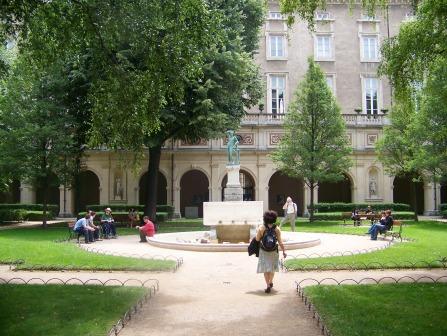
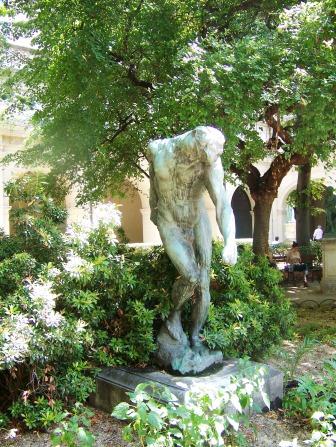
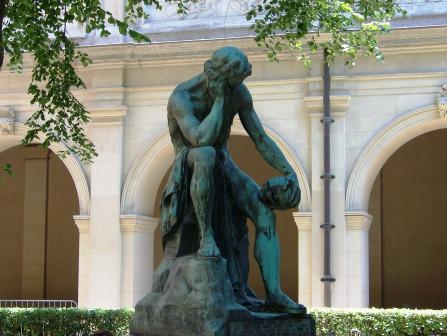
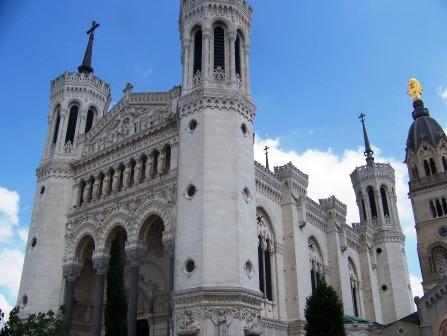
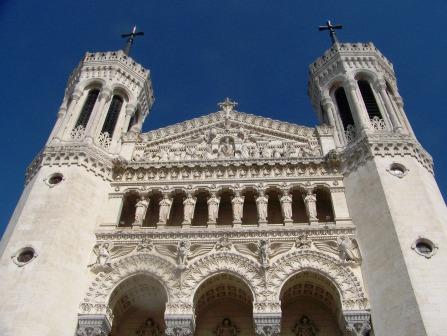
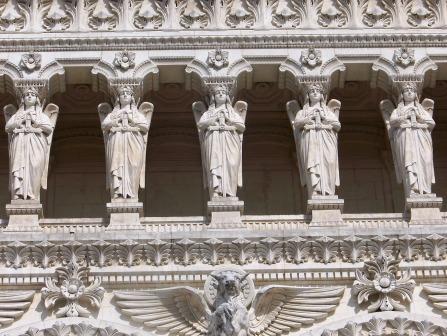
One of Lyon's most impressive sights
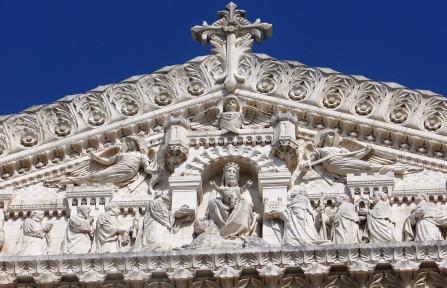
is the basilica of Notre-Dame at the top of the hill of Fourvière.
It sits, like an gigantic wedding cake, covered inside and out with religious
art and other details.
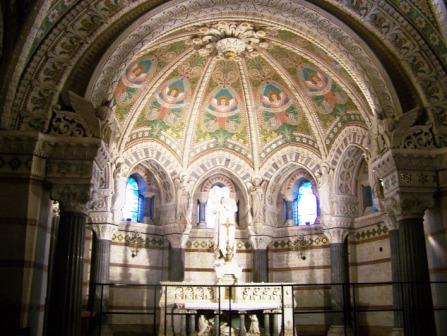
The crypt or lower part of the church
is astonishing enough.
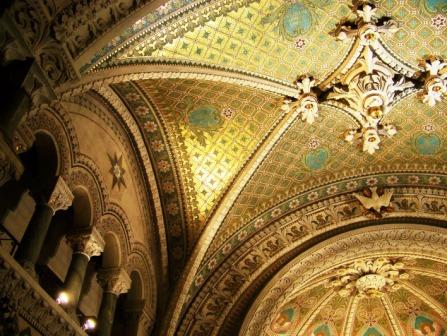
But it is the main part of the church
that is the most breathtaking--every bedazzling inch!
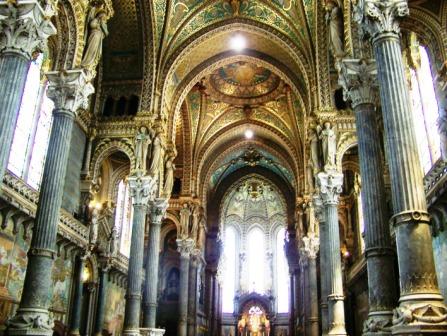
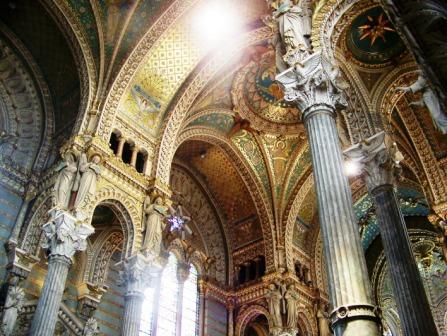
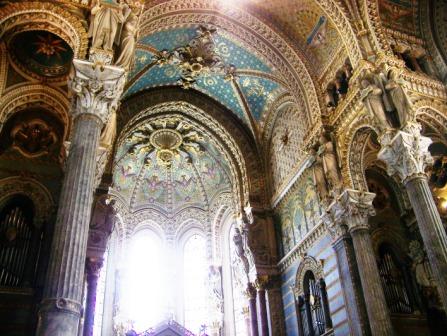
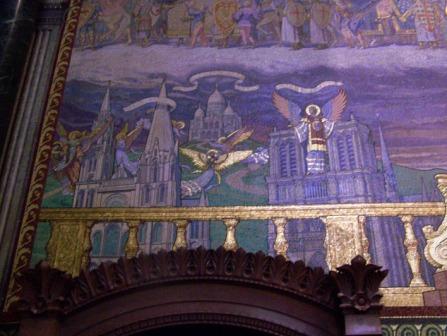
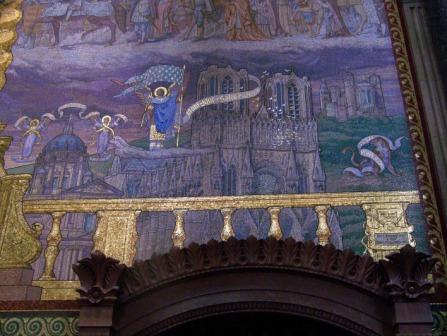
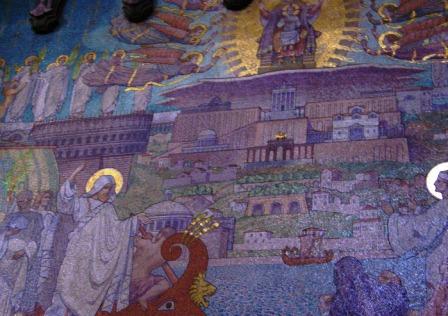
Among the many decorations are mosaics
showing the major churches dedicated to the Virgin Mary across France.
There is even a mosaic showing what
the hill of Fourvière
might have looked like in Roman times, when it was the forum.
Click here to
go to the next page on the art of Lyon.
Close this page to return to the
main menu and map of southern France.